
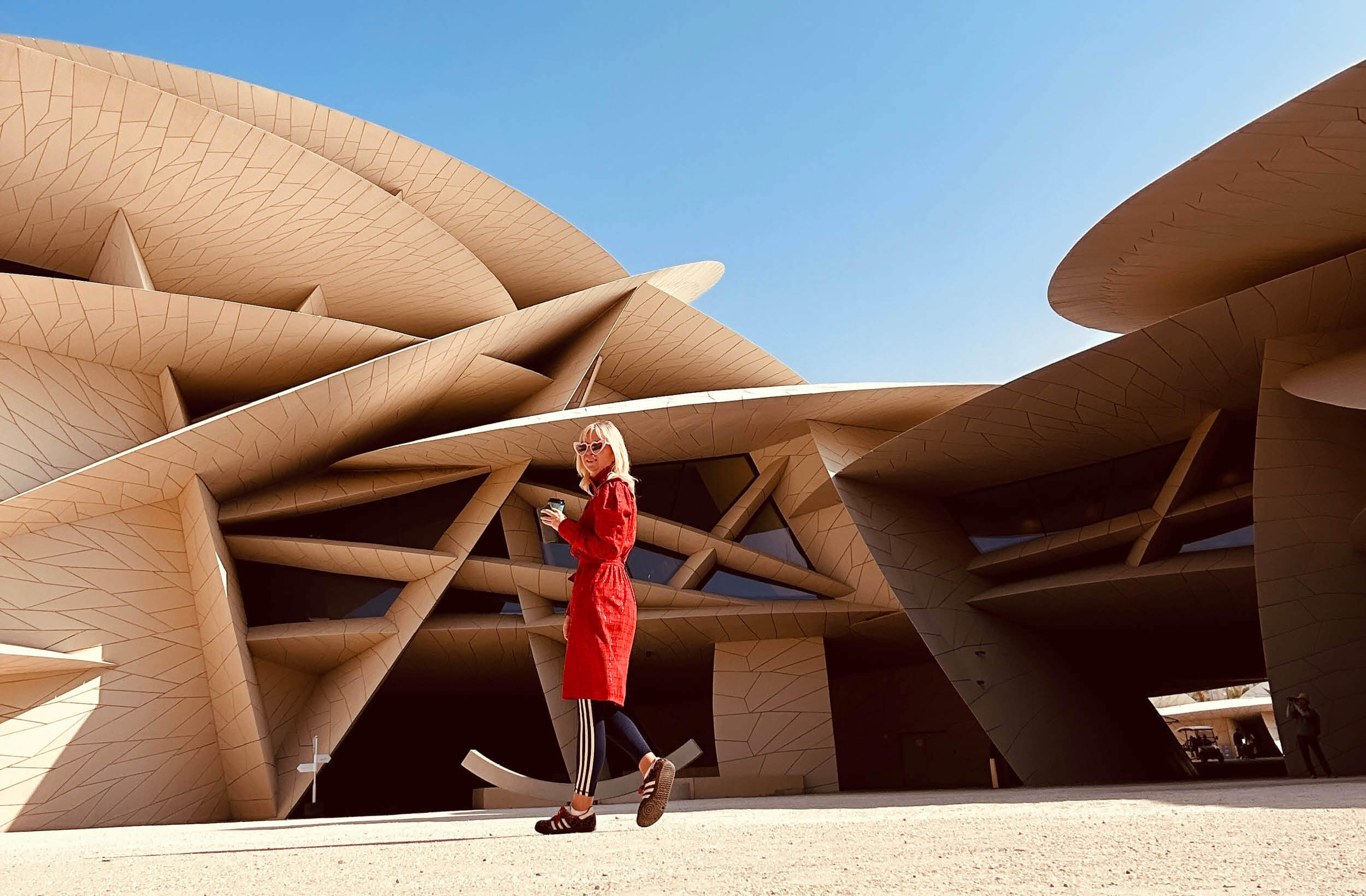
National Museum of Qatar exterior photograph by Fifth Estate
In our work creating iconic place brands, it has been proven time and time again that honouring context is essential for brand uptake and longevity of the vision far beyond launch. The National Museum of Qatar is, in its physical entirety, an homage to its context. Of course, one would expect a celebration of culture and identity from a national museum, but the level with which design has leveraged the nation’s story is an extraordinary feat. Commencing in 2003, the design for the museum was unveiled in 2010 and building was completed in 2019. When you dive into the detail of this architectural marvel, it’s clear that it was well worth the wait.
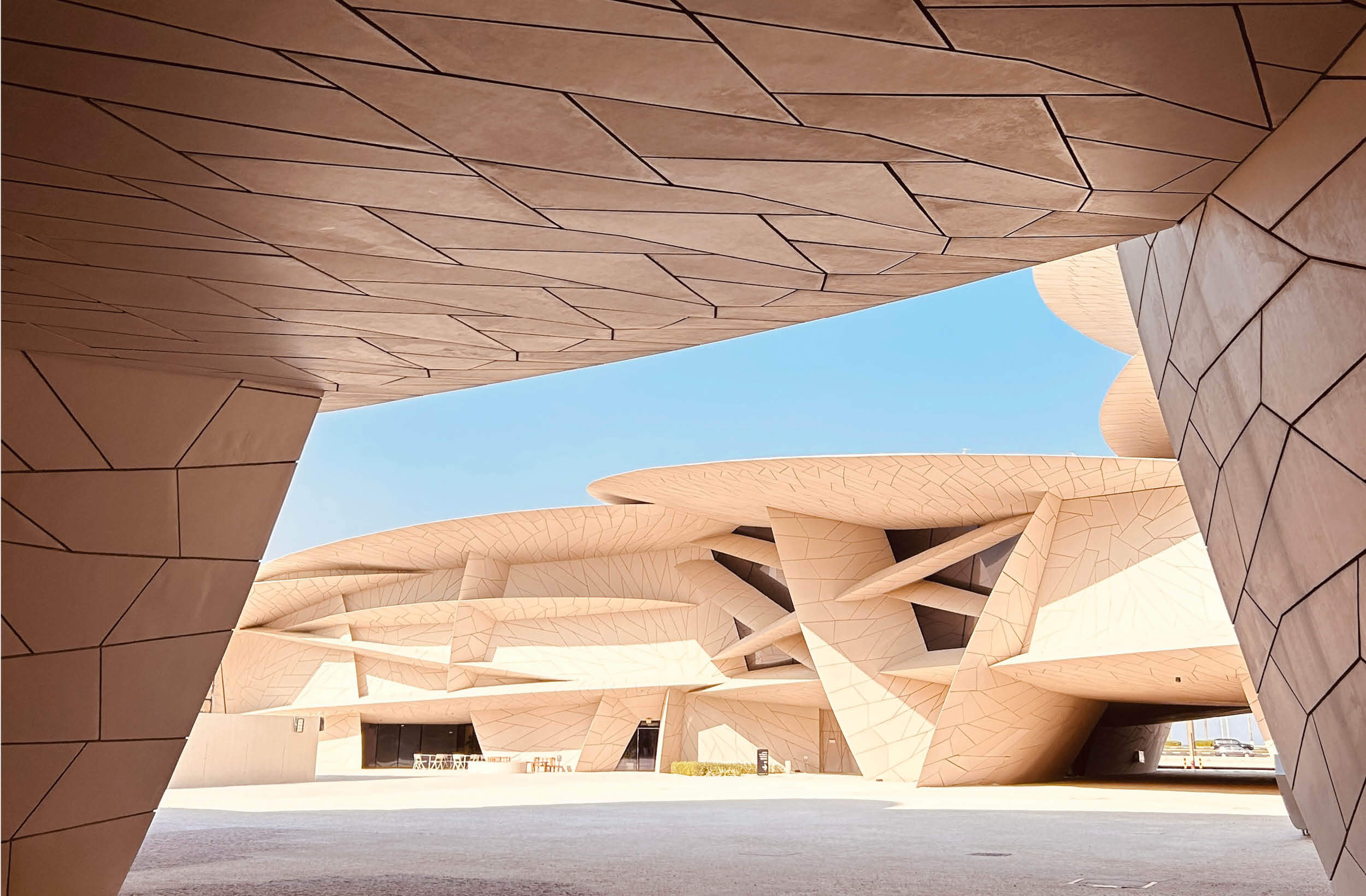
National Museum of Qatar exterior photograph by Fifth Estate
How Context Becomes the Heart of the Narrative
The sheer scale of the National Museum of Qatar is awe-inspiring in itself, but the source of inspiration for its design brings a new dimension to its devotion to context. Echoing the layers of the desert rose crystal that occurs naturally in this environment, the design by French architect Jean Nouvel of Ateliers Jean Nouvel literally crystallises the museum’s connection to the nation. The arid landscape of Qatar has enabled the formation of these desert rose crystals for centuries. The blade-like ‘petals’ are made of the sand itself, exemplifying the launch point for a narrative grounded in place – a rich creative territory to bring to life architecturally in a museum honouring the history and heritage of Qatar. The design is rooted in the hyper-local ecosystem as well as the nation’s proud heritage, but the overarching experience interweaves the ambitious vision for the future – the unconventional structure requiring cutting-edge installation and construction to transform the vision to reality. “Taking the desert rose as a starting point turned out to be a very progressive, not to say utopian, idea. I say ‘utopian’ because, to construct a building 350 metres long, with its great big inward-curving disks, and its intersections and cantilevered elements – all the things that conjure up a desert rose – we had to meet enormous technical challenges. This building is at the cutting-edge of technology, like Qatar itself,” says Jean Nouvel. The National Museum’s masterful confluence of these narrative threads is the key reason it has been so widely embraced – it now sits on a tentative list for a UNESCO World Heritage Site listing.
What It Got Right
Unequivocally, ideation of this now-iconic building went to the heart of location, legacy and future trajectory for Qatar – context was the genesis of the museum’s design, not something tacked onto a plaque following construction. The design itself sought to celebrate Qatar and everything it represented (and will represent) in its past, present and imminent future in high definition. And this goes beyond its striking facade. Step inside and you’ll see an incredible collection of galleries devoted to Qatar’s flora and fauna, its Bedouin tradition and sweeping history through the ages, displayed with the same unconventional flair as the entire building. Its internal focus on history and heritage is no surprise – it fulfils a national museum’s purpose – but, by orienting the brief to ensure every part of this awe-inspiring structure honours context while heralding a new age for Qatar, the creators communicate the values and vision for the nation proudly and boldly. This unconventional, cutting-edge and sculptural building is the ultimate demonstration of pride of place – one that powers Qatar’s trajectory to the future.
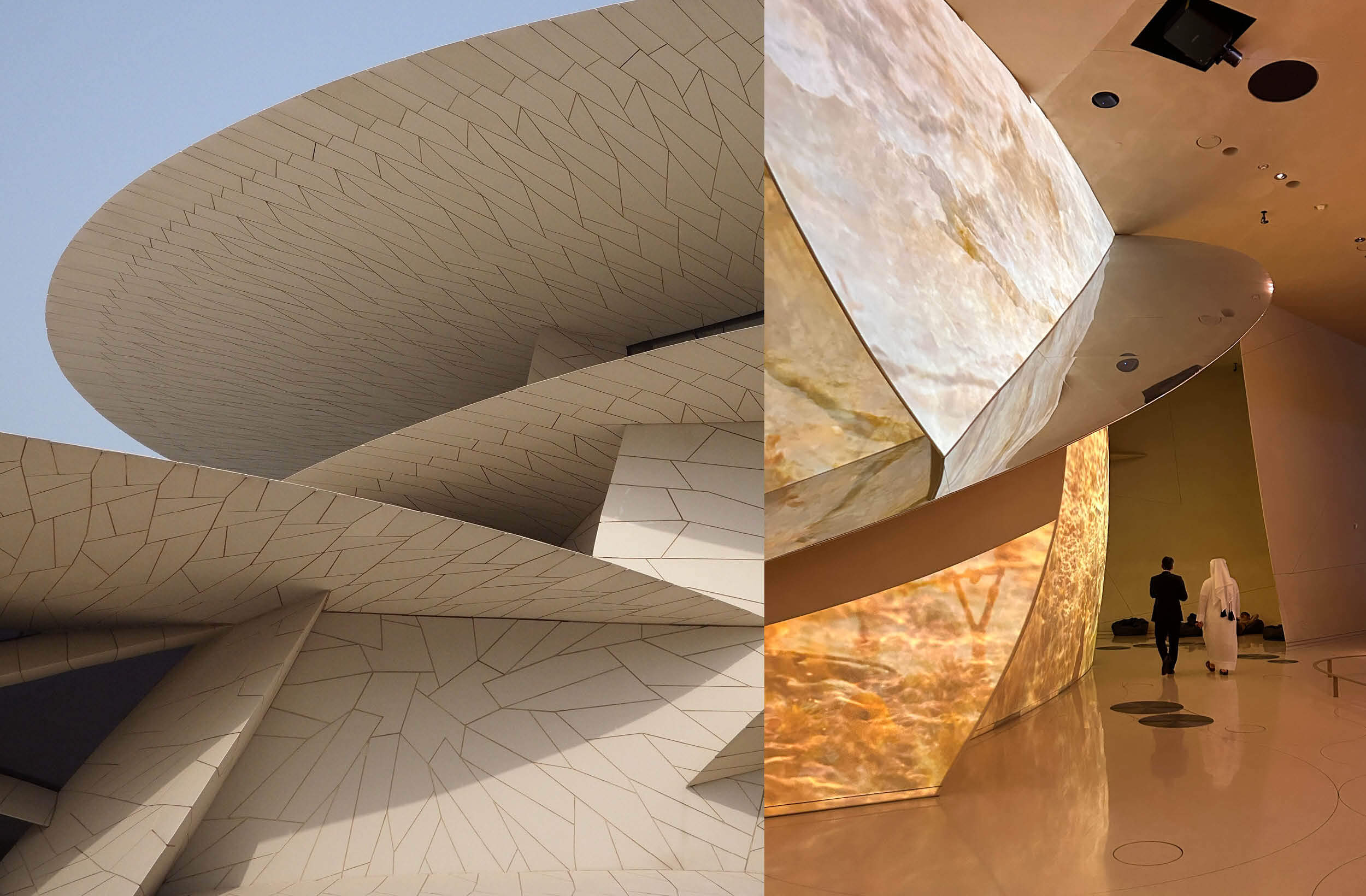
Photography of the National Museum of Qatar's exterior (left) by Natalya Rostun, interiors (right) by Fifth Estate
The Validation of the Vision
Although the desert rose crystal is endemic to Qatar, it had no formal recognition as a national symbol before the museum was constructed. However, since the museum’s completion, the desert rose has been recontextualised in the eyes of the nation. Now widely accepted as a new national emblem , the museum’s intertwining of this endemic crystal with Qatari identity has become an embodiment of national and cultural pride. It has given the people something real and powerful that literally crystallises their identity. By immortalising this naturally occurring crystal that essentially blooms in the arid expanse of Qatari desert, Jean Nouvel not only presents an awe-inspiring museum of Qatari culture and history, he simultaneously honours the resilience of the Qatari people and their ability to thrive in all circumstances. He managed to look into the soul of Qatar while driving towards its brilliant future and this is why the building is so iconic. The National Museum of Qatar’s overwhelming acclaim and acceptance is another powerful example of just how vital honouring context is in placemaking projects – deep knowledge of heritage, immersion in history, obsession with iconography and careful consideration of the local audiences the project will reach. Because if these vital elements are disregarded, a project has no basis, no connection, no hook and no relevance to the very places it attempts to become a part of. And this is precisely the approach Fifth Estate takes with every placemaking project. Unequivocally, context matters.
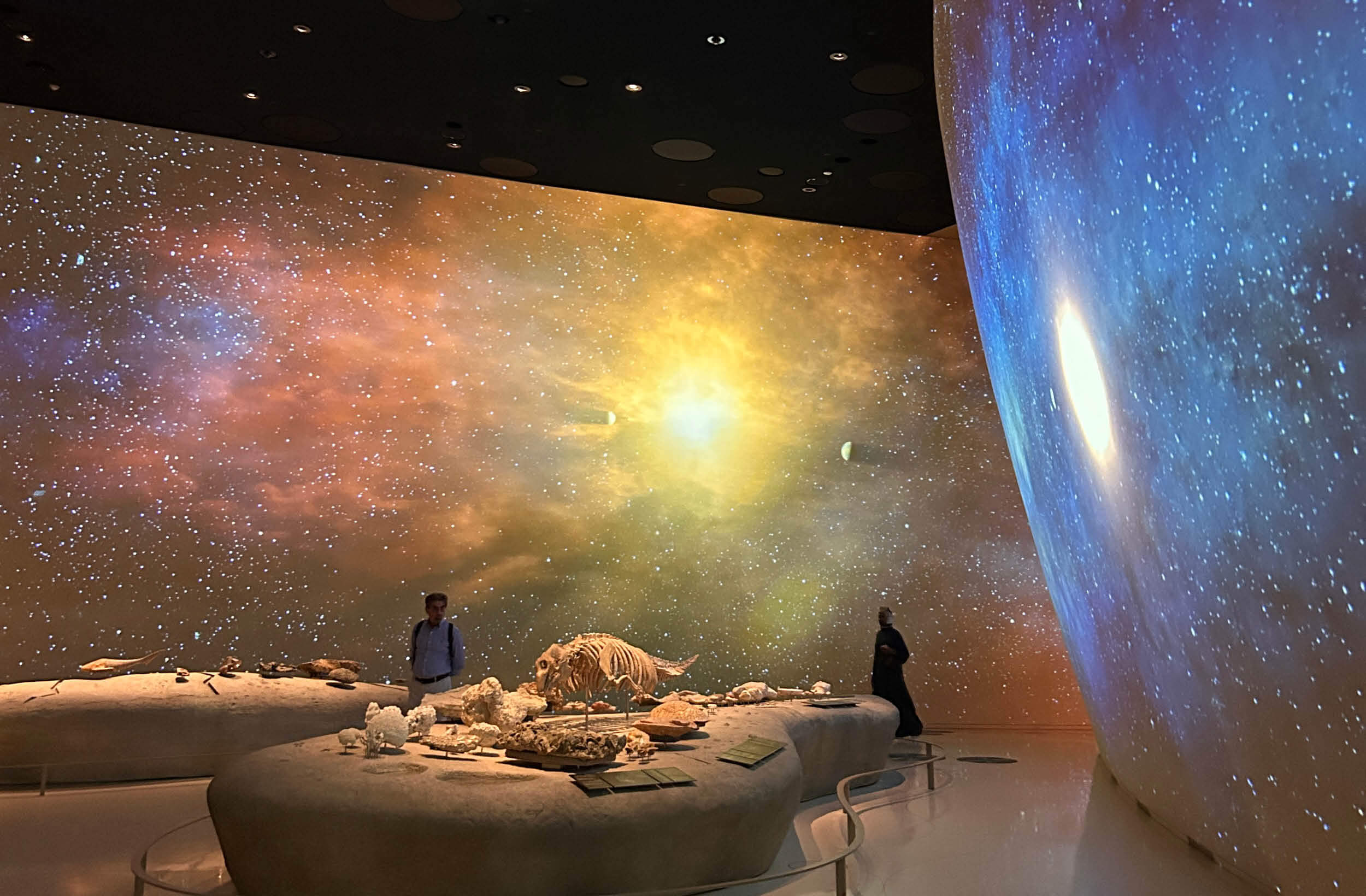
National Museum of Qatar’s interiors photograph by Fifth Estate
Frequently Asked Questions
What is the National Museum of Qatar?
The National Museum of Qatar in Doha houses extensive collections of the nation’s cultural, geographic and historical artefacts. Designed by Jean Nouvel of Ateliers Jean Nouvel, the building inspired by a desert rose crystal was completed in 2019.
What placemaking projects has Fifth Estate worked on?
Fifth Estate has developed place brands for numerous international projects including exclusive residences, multinational hotels and developments that impact entire nations. Some examples of our placemaking work include Al Jabal Al Aali, A’Thuraya City, Sultan Haitham City, Hayat Island and Al Mouj
Has Fifth Estate worked on projects in Qatar?
Yes, Fifth Estate worked on the brand identity for The Vyra – a collection of luxurious residences in Doha. Fifth Estate also developed the brand identity for The Plaza, a mixed-use ultra-opulent destination that combines residences, retail and fine dining with a hotel component too.


