Zayed National Museum photograph by Alexander Kaufmann
The Zayed National Museum is iconic. Opening in 2025, it’s not only the incredible collection of artefacts dating back 300,000 years that makes the museum noteworthy. For Fifth Estate, as devotees of ground-breaking architecture, particularly design that bridges place, passion and purpose, it’s hard not to revere the exceptional elements of this masterpiece. Here are our favourite details and how they align with our own portfolio.
Photography by Timur Gibadulin
1. Consideration of Context
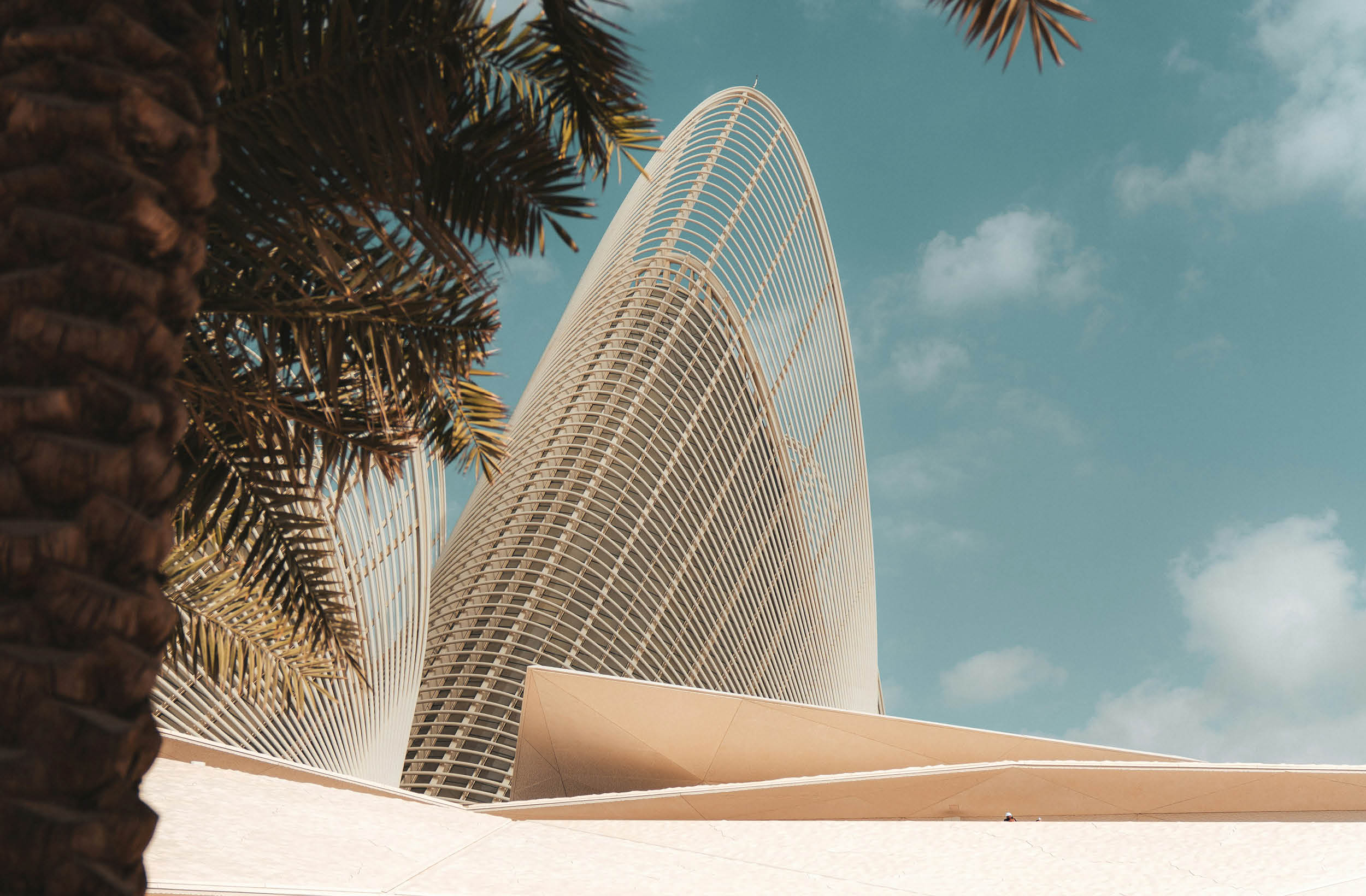
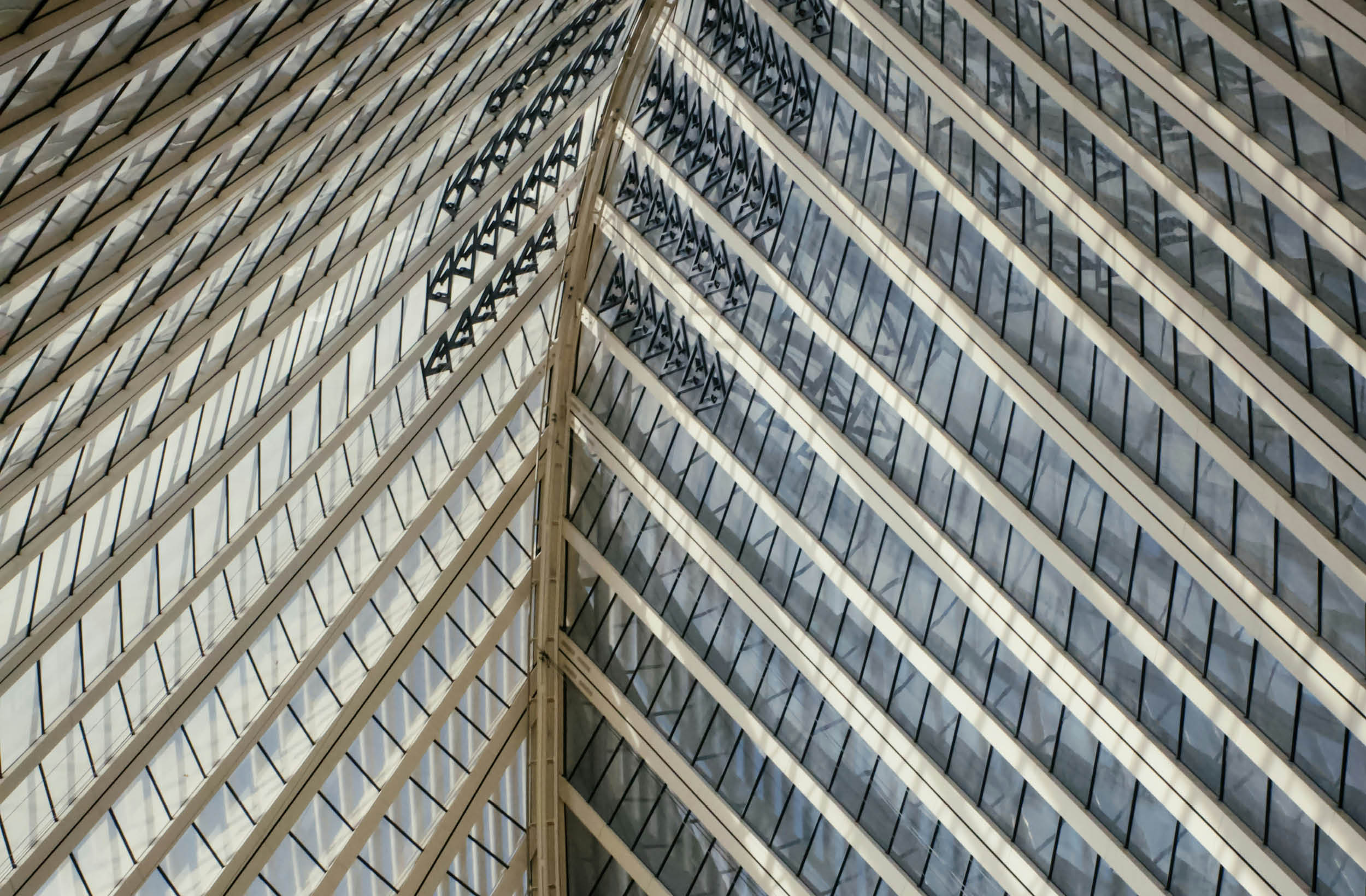
Weaving together national identity, environmental needs, future vision and bold design, Zayed National Museum artfully honours context and creativity simultaneously. Looking to the proud falcon that soars as UAE’s national emblem, the design by Foster + Partners heroes five wings that rise above the desert – the steel structures’ sculptural forms are simultaneously breathtaking and practically necessary. Not only a powerful homage to national context and cultural identity, they’re also glazed to funnel light into the museum and feature air vents that draw hot air out of the atrium. This considered approach to cooling is further supported by pipes buried deep underground that feed naturally cooled air into the same atrium. Epitomising form and function and galvanising the identity of the context in which it sits, the Zayed National Museum offers a masterclass in multi-dimensional architecture.
2. Dedication to Sustainability
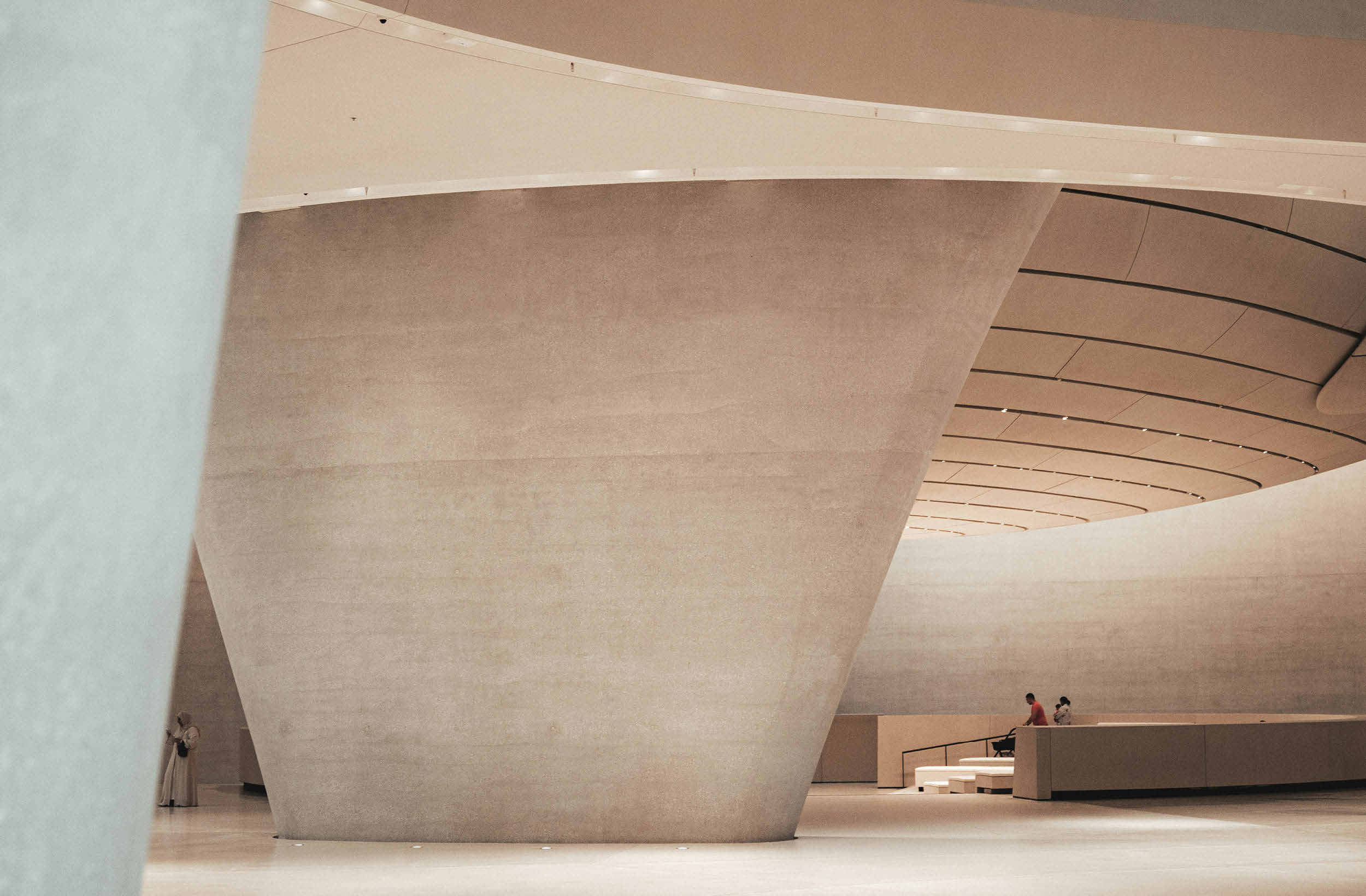
A continuation of its consideration of context, the Zayed National Museum foregrounds sustainability in practice, which becomes a central facet of its personality. The main gallery spaces of the museum exist within a central mound, which insulates the space through solar power. The mound itself forms a protective shield over the interior so that the heat of the desert can’t penetrate the inner spaces. And, in another nod to the mythology of the context, the mound is covered in textured, faceted panels that feature designs inspired by the unique topography of the terrain. An additional four galleries each sit underneath one of the steel wings – these ‘capsules’ featuring a skylight made from electrochromic glass that calibrates its level of transparency based on the strength of the sun’s rays at any given time. This is another way that the design has ingrained sustainability in every decision, ensuring the museum maximises its passive-cooling techniques while minimising its carbon footprint. Sustainability is not an afterthought.
Zayed National Museum photograph by Alexander Kaufmann
3. Merging of Legacy and Destiny
The Zayed National Museum’s devotion to showcasing the history of the United Arab Emirates means that any contemporary design for its structure would have effectively merged legacy and destiny. However, rather than ticking a box and turning up the volume on other details, Foster + Partners has embodied this interrelationship exceptionally – creating a powerful expression of proud legacy that informs and empowers a brilliant future. “Zayed National Museum gives our nation’s story a permanent home,” says His Excellency Mohamed Khalifa Al Mubarak, Chairman of the Department of Culture and Tourism Abu Dhabi. “Our national museum serves to preserve and share our past while connecting generations. It is where our children and grandchildren will discover the values that built this country: unity, humility, openness, and respect for heritage. These are lived principles that continue to guide us, and when visitors from around the world walk through these galleries, they will gain a deeper understanding of the United Arab Emirates – past, present, and future.” Merging legacy and destiny was perhaps the foremost ambition of the brief for this museum, and it has been delivered upon in expectation-exceeding fashion.
These are lived principles that continue to guide us, and when visitors from around the world walk through these galleries, they will gain a deeper understanding of the United Arab Emirates – past, present, and future.
Why Fifth Estate Celebrates the Zayed National Museum
An iconic creation that will stand the test of time, Zayed National Museum is incredible for so many reasons – we’ve delighted in just a few informed by our own experience on projects of this scale and importance. Across our portfolio, particularly in our Oman-based projects where we have developed 360˚ creative identities and storytelling platforms for masterplan communities, cities and developments, the above details are the kinds of elements that we draw inspiration from. These are the details embedded at inception that ensure a deeply rooted yet future-forward expression in the development itself and the branded ecosystem created to promote it – for launch and beyond. Zayed National Museum masters the connection between place, people and purpose – it, in fact, embodies connection. Rising as a point of connection for people from all over the world, of all generations, to connect with rich history while engaging with a vision for the future, Zayed National Museum easily earns its place on Fifth Estate’s inspiration board. It’s a marvel.
Frequently Asked Questions
What is the Zayed National Museum?
The Zayed National Museum is the national museum of the United Arab Emirates, located in Abu Dhabi. Opened in December of 2025, it features six permanent galleries, one temporary exhibition and an outdoor gallery that showcase the UAE’s rich history with artefacts dating back 300,000 years.
What is Fifth Estate's connection to the Zayed National Museum?
While Fifth Estate has no formal connection to the Zayed National Museum, its incredible design is worth celebrating. That said, Fifth Estate has worked on other branding and creative identity projects that have been designed by Foster + Partners, including Sankari Residences.
What is the inspiration behind Zayed National Museum?
National Museum’s design is largely inspired by the falcon and the history of falconry in the UAE. The falcon is the UAE’s national emblem and the Zayed National Museum features five structures that appear as wings emerging from the ground.